Now posts ↓

Showing posts with label putin. Show all posts

Friday, 12 February 2016

Russia in Crisis: the Agonies of the Oil Empire

Small business desperate to stop its demolition by Moscow City government display a Putin portrait


Reblogged with permission from LeftEast. Translated from the Russian by Emma Clair Foley.

Author Ilya Budraitskis is a historian, cultural and political activist. Since 2009 he is Ph.D. student at the Institute for World History, Russian Academy of Science, Moscow. In 2001-2004 he organized Russian activists in mobilizations against the G8, in European and World Social Forums. Since 2011 he has been an activist and spokesperson for Russian Socialist Movement. Member of Editorial board of “Moscow Art Magazine”. Regular contributor to the number of political and cultural websites.

=====

Everyone understands that the coming year will see Russia immersed in an economic crisis, one which will almost inevitably entail a social and political crisis. It was already over a year ago that Vladimir Putin, while taking part in his favorite genre of television, “direct association with the people,” assured viewers that the crisis was a matter of temporary difficulties which would be successfully overcome within a year or two. These assertions are not simply a propagandist’s device, but a reflection of deeply-rooted elements of the consciousness of Russia’s ruling elite, accustomed as they are to switching out strategy for tactics and reacting to challenges as they arise. This consciousness is the result of an unbroken decade of increase in oil prices during which the entire domestic economy was tightly bound to the export of natural resources.

The windfall from oil sales both created the sense that Russia’s foreign policy muscle was strengthening and guaranteed a constant rise in state spending. The army, the bureaucratic apparatus and the murky system of government procurements received the bulk of this beneficence. Nevertheless, the growth in spending in the social sphere was seen as more of a residual effect, and education and medicine have always been regarded as the first things to sacrifice when money is short.

The years of oil prosperity fostered the growth of an ugly social model in which the inflation of energy resource prices on speculation compensated for the decline of production, a phenomenal level of social inequality, corruption, and increasingly systemic authoritarian political power protecting the interests of the elite. Vladimir Putin’s popularity rested (and, for now, still rests) on this uncertain foundation. Key to this popularity was the widespread notion that because of his ruthlessness, Putin is the one person who is capable of guaranteeing “stability,” an enduring trajectory of national growth protected from any risk of shake-ups.

Protesting lorry drivers hope for some words from the Tsar
The most valuable insight here for the majority of Russia’s residents is that “Putinist stability” is now most definitely a thing of the past, and that the Russian elite has no backup plan for redeeming the situation. By last year it had already become clear that the government’s anti-crisis politics boils down to a local variety of austerity outdoing even the current politics of EU governments in its ruthlessness. It consists of sharply reduced social spending, forced pension reform (a proposed increase in the retirement age to 65), the refusal on principle to index salaries to the rate of inflation (12.9% last year) and more taxes and fees collected from the population. The weakening of the ruble, restrained with the help of currency reserves introduced onto the market and increased interests rates at the Central Bank, made loans inaccessible to small- and medium-sized business and contributed further to the economy’s collapse.

The state budget for 2016, in accordance with this crisis, is based on calculation that set the median price of oil at $50 a barrel, but it has already fallen below $30. Although the government has not yet publicly considered revising it, the Minister of Finance has already recommended that all other departments reduce spending by 10%.

The situation is exacerbated by the current system of revenue distribution between Moscow and the regions, in which all revenue becomes part of the federal budget, only then to be recounted into local budgets. The result is a growing tension between the government and regional authorities, who must bear responsibility for these “austerity measures” before the people. At the same time, in an effort to maintain his popularity, the president publicly demands from them demonstrations of “social commitment,” putting them in an impossible situation.

The sharp decline in government revenues exposes the vulnerability of Putin’s “power verticals,” that is, the complete political dependence of local powers on the center combined with their economic “autonomy” (that is, responsibility for fulfilling budget responsibilities). The political losses incurred from austerity must be shouldered by the federal government headed by Dmitri Medvedev or local governors—anyone but the president, whose popularity should not under any circumstance suffer as a result of a reduction in the quality of life of the people who support him.

The figure of Putin as a “national leader” is the main basis of legitimacy for those in power in the eyes of the majority. The irony of the situation lies in the fact that people trust their president, but they don’t trust the state he represents. In these catastrophic conditions the Putin political machine is preparing for parliamentary elections, which are set to take place in September 2016. Like all previous elections, they will have to conform to the script written by the Kremlin. It currently appears to name “United Russia” as the majority in Parliament, while casting Medvedev as the victim of growing passive dissatisfaction. The “independent” candidates, as well as the kept opposition (including the communists and Zhirinovsky’s party) will attack the government for its antisocial austerity measures, but the president will remain beyond the reach of critics.

This guiding script may get out of control and provoke a wave of public disturbances (as happened in December 2011, after the previous parliamentary elections). The principal difference today may turn out to be the combination of political protests against an antidemocratic system and social protests against poverty and the government’s neoliberal policies. 2015 saw a serious uptick in local protests in connection with delays in the disbursement of salaries, job cuts and unnecessary new taxes. In December demonstrations by truck drivers indignant at new, extremely high road tolls took place in nearly half of all regions of the country. In some cities, there were protest actions against harsh limitations placed on state medical coverage. On the whole, experts estimate that there have been 409 protests in the past year linked to the violation of workers’ rights (168 of which took the form of work stoppages). That’s 76% more than the average for the period 2008-2013.

The economic crisis along with the regular political cycle (parliamentary elections in 2016 and presidential elections in 2018), will unavoidably provoke and strengthen divisions within the elite. The possible battle lines can already be faintly seen: between Moscow and regional powers; between government finance experts and army lobbyists, who will insist on an increase in the defense budget in the face of “external threat,” and among state corporations, demanding all new subsidies from the state budget to finance their huge debts.

In the attempt to maintain the existing balance of forces, the regime must revisit their foreign policy of the past two years, including the war that is still dragging on in Ukraine, conflict with the west and the developing military engagement in Syria. Moscow is already taking active steps toward the removal of US and EU sanctions. For the first time since the moment that Russia annexed Crimea, direct negotiations over the fate of Donbas began in Kiev in between Ukrainian president Poroshenko and Russian representative Boris Gryzlov (a member of Putin’s inner circle of “friends”). This meeting was followed by an hours-long consultation between the Kremlin’s main “facilitator” of Ukrainian affairs and Assistant US Secretary of State Victoria Nuland. The repeal of the sanctions is necessary for the Russian government, among other reasons to enable large-scale foreign loans to augment depleted national financial resources. Dependence on oil prices could soon be completely replaced by another dependency—this time on international creditors.

All of this means that Russia is on the threshold of serious changes, which in the short term indicate an end to “Putinism” as a system—at least as we have known it during these “fat” years.

See also:


Monday, 25 January 2016

Putin is persecuting Russian anarchists + antifa

Dmitry Buchenkov. CC avtonom.org.

Reblogged with permission.


====


By Dmitry Okrest.

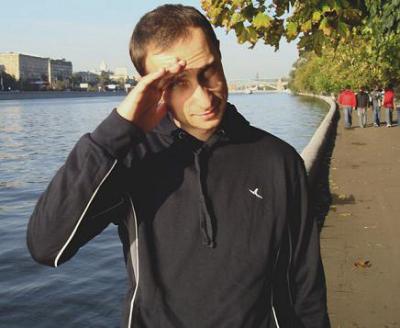
At the beginning of December, Dmitry Buchenkov became the latest person in Russia’s ‘Bolotnaya Case’, a series of investigations and trials into Russia’s opposition now in its fourth year.

Buchenkov, a 36-year old history lecturer at a Moscow medical university, is the 31st defendant in Bolotnaya. More than two hundred people were detained in the initial case, which stretches back to the ‘March of the Millions’, an opposition demonstration on the eponymous square in May 2012. The protest was timed to coincide with the inauguration of Vladimir Putin’s third presidential term, and this didn’t go unnoticed. During the sanctioned demonstration, the police cut off the square, in effect ‘kettling’ the protesters. Scuffles started between police and protesters, and a pitched battle of sorts began before the crowd was violently dispersed.

The prosecutions made against protest leaders, and allegations of geopolitical conspiracy, have come to symbolise the Kremlin’s response to the ‘Russian winter’ of 2011-2012. Despite the extent of the investigation and trial, Bolotnaya is yet to receive attention inside, or outside Russia. Journalists and activists are less and less interested. Only the police are still following it in numbers.

Yet the payback for Bolotnaya continues. On 22 December, Ivan Nepomnyashchikh, an engineer from the Moscow region, received a two and a half year prison sentence for participating in ‘mass disorder’, the charge against the majority of Bolotnaya defendants. By the time Buchenkov was arrested in early December, the first defendants from 2012-2014 were already on their way out of prison.

Dmitry Buchenkov will now face trial for turning over a chemical toilet on 6 May 2012. The prosecution’s main evidence is a photograph of a 30-year old man on Bolotnaya who looks nothing like Buchenkov.

Costly convictions


‘Buchenkov was an active member of the left-wing movement behind Autonomous Action, a large organisation of libertarian communists, which had dozens of groups in Belarus, Russia and Ukraine before it split,’ Aleksandr, a young anti-fascist, tells me. ‘Unlike most of the young anarchists who were detained during the march, Buchenkov's name was comparatively well-known’, he added.

‘Power exists and shall continue to do so for as long as human societies exist,’ notes Buchenkov in a letter to me. ‘The task of libertarian communism is not to destroy power, instead we should organise it in the form of self-government, on a socialist basis. The political task of anarcho-communism is to organise power in non-governmental forms.’

Indeed, Buchenkov’s arrest is another instance of the Russian authorities’ focus on anarchists and anti-fascists. Buchenkov now joins fellow members of Autonomous Action in jail—Aleksei Gaskarov, sentenced as part of Bolotnaya, and Aleksei Sutuga, who was charged with fighting against neo-Nazis in September 2014. For the past six months, Sutuga has been denied correspondence and held in solitary confinement.

Buchenkov’s investigator Aleksei Dobarin has form in this area. Dobarin has previously worked on the Bolotnaya case, investigating Vladimir Akimenkov and Leonid Rukavishnikov, activists from the far left Russian organisation Left Front (and who have condemned Russia’s actions in south-east Ukraine). Prior to Bolotnaya, Dobarin worked in the Kaluga region, some 70 km from Moscow, where he investigated nationalist and neo-Nazi groups.

As Aleksandr, the young anti-fascist, tells me, in the three years he’s known Buchenkov, the latest figure in Bolotnaya has had several encounters with the security services. Police officials would greet him at demonstrations, and he was threatened after starting a social club; once he was beaten to the point of losing consciousness.

But Buchenkov remained active. Forced to leave his work in a Nizhny Novgorod university, he moved to Moscow in 2009. Following Russia's 2015 economic crisis and multiple economic sanctions after the annexation of Crimea, he decided to publish a free newspaper, which he handed out to people coming to the Russian capital looking for work from the regions.

Despite the general fatigue of Russia’s civil society, Buchenkov’s case has attracted its attention—the defendant’s lawyer Svetlana Sidorkina is yet to gain access to the case. Instead, at the first hearing, Buchenkov was represented by a legal aid lawyer appointed by the Interior Ministry, who had previously worked as a police investigator in Siberia. More than 70 legal professionals have since signed an open letter questioning this behaviour.

Yet Buchenkov has few chances for solidarity from like-minded people in Europe. Following Maidan and the war in Ukraine, the European left has split once again.

Who are your comrades now?


The active participation of the far right in EuroMaidan, the war in Ukraine and annexation of Crimea has brought disarray to the left in Europe. Most were confused as to what position to take. After EuroMaidan, Kyiv was seen as ripe for revolutionary change. For others Russia—which opposed these changes—was an opponent of a unipolar world and thus an example to follow.

Russia’s alternative banner, as heralded by Russia Today, remains out of sight for Russian citizens themselves. The majority of programmes on the emancipatory potential of the Kurdish women’s movement or Julian Assange’s interview with the leader of Hezbollah aren’t accessible to Russian audiences. Only a few programmes come with Russian subtitles.

RT’s ‘western’ pull is effective. Last year, I interviewed Vicenzo Bellantoni, secretary of Italy’s Communist Refoundation Party, which had organised a series of lectures and concerts across Europe in support of the ‘Donetsk People’s Republic’ (DNR).

As Bellantoni saw it, the DNR was involved in a ‘mass anti-fascist struggle against an illegal fascist and reactionary government, which had come to power as a result of an armed coup. All communist movements are united in the people’s struggle, and we intend to resist this reactionary coup. We rely on many websites for our convictions: the sites of the Russian and Ukrainian communist parties, Russia-1 and Russia Today.’

‘There’s an idea in the west that there’s an alternative to the US-Brussels consensus,’ says Ilya Budraitskis, who coordinates the Russian socialist movement. ‘People have an intuitive need to replicate the familiar contours of the Cold War, where there’s two centres of power, each of which represents certain values.

‘The Soviet Union, and now Russia, is associated with social justice and national emancipation. We can choose which side in this global confrontation with which to associate ourselves. The mistake of many on the left is that, as they see it, Russia is far from the continuation of the Soviet Union.’

Short memories


For those who miss the USSR, the now disintegrated country is valued for its power and position in the world, as well as certain social welfare guarantees. Russia’s anti-fascist rhetoric and anti-American message have brought much in the way of support from some on the European left, who have chosen to support Moscow despite its violation of labour legislation, low wages and everyday xenophobia.

Buchenkov himself once declared that workers in authoritarian post-Soviet states now found themselves in semi-feudal relationships with employers. The political elite, he continued, had usurped state property while the opposition was weak. It could offer nothing but renewed religious conservatism or the fulfillment of neoliberal demands, concluded Buchenkov.

Indeed, as Budraitsksis sees it, ‘Contemporary Russia cannot present a single idea that could be mobilised elsewhere. It presents no alternative to the model of global capitalism emerging from Brussels or Washington. Yet either from inertia or a lack of memory, the politics of Moscow is seen precisely in this mold.’

Dmitry Buchenkov considers himself to be a leftist, but he comes from that minority of Russian left-wingers that view the Soviet experience and what came to replace it in a critical light. Unfortunately, the arrest of a left-wing activist in a country, which, according to tradition, is a staging ground for resisting American imperialism, is yet to garner a reaction.

A case in point is that of Aleksandr Kolchenko, the Crimean student and anarchist activist arrested last year for an arson attack on the office of a pro-Russian organisation. There was precious little solidarity from European countries, at least not in comparison to the murder of antifascist activists by neo-Nazis in the late 2000s.

Russia’s Anarchist Black Cross, an organisation set up to support political prisoners, notes that European activists are not only less interested in news of arrests, they’re giving less in terms of donations. Aleksandr, who is coordinating help for Buchenkov inside prison, also notes that attention from western NGOs is decreasing.

Instead, some on the European left are busy supporting the unrecognised republics in south-east Ukraine with music festivals, lectures and cinema clubs, comparing the conflict to the Spanish Civil War. Many more make clever remarks about Kyiv’s neoliberal path, while ignoring the fact that Moscow is travelling the same road.

‘You have to take everything that happens in life philosophically,’ writes Buchenkov from jail. ‘The people in prison are also people, our fellow countrymen, many people from former Soviet republics. It’s a slice of society, with all its problems and shortcomings.

‘I can only imagine why I’ve been arrested, but I believe that my imprisonment is connected to my political convictions. I didn’t exclude the possibility of persecution for my beliefs. I am outraged that I’m being persecuted for actions for which I am not responsible. I wasn’t even at Bolotnaya.’


Edited to add: In the UK the comrades from Italy mentioned by Okrest are matched by the (misnamed) group Solidarity with the Anti-fascist Resistance in Ukraine (SARU). That group is backed by Stop The War Coalition (STWC) leaders Andrew Murray and Lindsey German and the STWC website has promoted the group, as well as run numerous articles chiming with its politics. This has led to the extraordinary outcome of SARU backing smears against the National Union of Mineworkers for their solidarity work with Ukranian comrades. SARU are not marginal, they have almost 5,000 likes on Facebook.


See also:

Monday, 11 January 2016

Putin's Russia hounds 18yo to death

Vlad Kolesnikov

Clare Bigg makes clear, for the avoidance of doubt, that her communications with Vlad show why he killed himself. I would also add to Halya's comments that Clare notes that "rumors of his budding homosexuality did not help" in how he was mistreated.

Reblogged with permission.

====


By Halya Cornash

Radio Svoboda reports [English version] that 18-year-old Vlad Kolesnikov has killed himself 6 months after his defiant demonstration of opposition to Russia’s annexation of Crimea lost him his home, his place in technical college and led to a campaign of harassment against him. Vlad took an overdose of medication on December 25.

Vlad became known well beyond Russia in June for daring to wear a T-shirt with the Ukrainian flag and the words “Return Crimea” on it, as well as posting an anti-war banner at his technical institute in Podolsk. Vlad recalled the sheer hatred in the face of a school official after the latter saw his T-shirt, and he was first threatened by another student then attacked by a group of classmates. The police then got involved but were mostly interested in where he’d got the T-shirt.

It was after this attack that his grandfather with whom he was living learned of Vlad’s views and supposedly seditious behaviour. The former KGB officer and staunch supporter of the current regime effectively renounced his grandson altogether, using horrific abuse against him, called him an enemy and traitor, and ensuring that he was removed from the college, formally “at his own wish”. He was sent to his father in Zhygulyovsk (Samara oblast) and obviously had just as much difficulty finding a common language with relatives there.

Back in June, he told Radio Svoboda correspondent Dmitry Volchek that all democrats in Russia had been exiled for their views, and that he too felt that he was being sent into exile.

He had earlier also aroused the fury of local officialdom when called to the military recruitment commission to undergo a medical examination and get his conscription papers.

He told Volchek that he had played the Ukrainian national anthem on his cellphone, and said that he considered it shameful to fight in the Russian Army.

At an anti-war demo
The recruitment people decided to avoid further discomfort with the young man by thrusting him a form stating that he had a ‘personality disorder’.

It is hideously poignant now reading both the reports from June this year, and Vlad’s Facebook page. In June, he had received a lot of international support, and had a huge number of Facebook ‘friends’ and followers.

He probably also had nobody around him to provide him with any real support or from whom he didn’t feel totally alienated.

At one stage he was even prevented from writing on Facebook, but over recent months he had followed what was happening in Russia, reporting on the imprisonment of Ildar Dadin, the arrest of the Director of the Ukrainian Literature Library and a lot more.

One of the people who writes under Vlad’s last entry says: “There are no words, only a sense of shame for a country that kills its future”.

Светлая тебе память, Влад! It means so little, but you will be remembered, and much missed

Thursday, 19 November 2015

On Russia’s selective ’retribution’ for acts of terrorism


Andrei Lugovoi, FSB assassin and Russian MP


Reblogged with permission.

====

By Halya Coynash

Andrei Lugovoi, Russian State Duma Deputy and the UK’s chief suspect in the killing of Kremlin whistle-blower Alexander Litvinenko has promised “inevitable retribution” for the terrorists who blew up Russian A321 and blamed “European tolerance” allowing “a flow of migrants” into Europe for the terrorist attacks in Paris on Nov 13.

The irony could not be more pronounced. Litvinenko, who like Lugovoi was a former FSB [Security Service] officer, died a hideous death from radioactive polonium in 2006 not very long after publishing a book in which he accused the FSB of being behind the apartment block bombings in 1999 which killed several hundred people and helped Putin come to power. That book was recently placed on the List of extremist materials in Russia, a few months after Lugovoi received a state award from the President “for courage and daring demonstrated in carrying out work duties in conditions linked with risk to life”. *

Litvinenko shortly before his death

Lugovoi became an MP shortly after Britain’s request for his extradition was turned down, and he is now the deputy head of the State Duma Committee on Security and Countering Corruption. It was clearly in this capacity, and standing in front of the State Duma sign that he gave a long interview, entitled “You shouldn’t believe the USA” to Rossiya 24.

After more than a week of vague statements, denials and furious conspiracy theorising, Russia announced on Nov 17 that the Metrojet plane which crashed in the Sinai Peninsula on Oct 31 had been destroyed by a bomb.

Lugovoi called this a “monstrous crime” and said that Russia’s reaction must follow two principles: no negotiating with terrorists and inevitable retribution. He agreed with unnamed government officials in saying that Russia must increase its activity in the Middle East, including in Syria.

There were certain key messages, one being that Russia has allegedly made huge strides in fighting terrorism – through the “effective work” of the FSB, through legislation, etc. The A321 attack is presented as “unique” and as due to “treachery of local security services”. Putin’s press secretary Dmitry Peskov reports that the Kremlin’s leader has ordered “those guilty exterminated”. There is no indication as to how ‘guilt’ is to first be determined. Nor, of course, is there any suggestion that the terrorist act, if such it be, may have been linked with Russia’s active role over the last month in bombing areas under the control mostly of groups opposing Syria’s President Bashar al-Assad, including, but by no means exclusively ISIS.

Lugovoi goes on, as have other pro-Kremlin politicians, to point out that Europe is also not safe and he directly blames “European tolerance”. He makes no mention of the thousands of refugees fleeing the Assad regime and the bombing in Syria, and speaks only of a “flow of migrants” which Europeans supposedly clap their hands over.

The Ahmads brought their four children to Russia seeking safety, but they were refused asylum
This, of course, enables him to ignore such shocking violations of international law as the continued presence at a Moscow airport of an entire family of Syrian refugees whom Russia is simply refusing to allow into the country.

Lugovoi basically sings Russia’s praise, suggesting that the FSB’s role should be an example for other countries. The latter, he suggests, must consider closing borders. Numerous reports on pro-Kremlin media have broadcast predictions that France and / or Europe will be forced now to resort to other restrictions on people’s freedom - doubtless also following Russia’s role model.

Asked about an anti-terror coalition, Lugovoi says that Russia’s only ally was its own army and fleet. Lugovoi, who spoke extremely emphatically on all other subjects seems nervous here, and waffles only about some possible “temporary” measures. He does, however, return to a standard theme in Russian propaganda, by saying that the USA will always do everything to reduce safety for Russia and “our western partners”, and that the more “mess” there is between Russia and European countries, the better for the USA who should not be believed.

Lugovoi has long spoken and, doubtless, acted, in unison with Russia’s leaders and his key statements here are similar to those made by others. It is almost certainly no accident that Putin should have taken the opportunity to pass into force a plan on developing the military until 2020. While spending on medicine has dipped catastrophically in Russia, together with the standard of living, more and more money is being spent on the military. Any Levada Centre public survey will make it quite clear whom Russians deem their enemies. ISIS has seldom received a mention.

With respect to Russia’s ‘principles’ of not negotiating with terrorists and “inevitable retribution”, there are many bitter words that can be written about the Kremlin’s funding and support for militants, a large number of them from Russia, responsible for hostage-taking, forced disappearances, extra-judicial executions, etc. in Crimea and Donbas.

There will be cases before the European Court of Human Rights and, almost certainly, the International Criminal Court over Russia’s annexation of Crimea and behaviour in other parts of Ukraine.

Footage on July 17, 2014 which Life News reported as a Ukrainian military plane downed by militants
It is Russia that has blocked an international investigation into the downing of the Malaysian MH17 airliner by a Russian-made BUK missile. This was reported on Russian television as having been downed by Kremlin-backed militants with those reports and incriminating footage only removed after it became clear that a passenger plane had been downed, not a Ukrainian military aircraft.

A European Court of Human Rights judgement is now awaited over one of the most monstrous terrorist acts in the Russian Federation. The Court in Strasbourg has already accepted that Russia must answer for its failure to prevent the tragedy at the school in Beslan, North Ossetia in which 331 people died, more than half of them children. For over two days then Putin even lied about the number of people held hostage in the school, and it is known that the terrorists were so angered by the claim that they were not prepared to negotiate that they refused to give the children water. There are serious grounds for believing that Anna Politkovskaya was poisoned to stop her negotiating, and that the explosions used to justify the storming of a building holding well over a thousand children, parents, grandparents and teachers, did not come from the terrorists. There was no ‘inevitable retribution” and Russia has, on the contrary, done everything to block a proper investigation and bring those responsible to answer.


* The results of a public inquiry into Litvinenko’s murder are due out soon. Lugovoi and Dmitry Kovtun left traces of radioactive polonium everywhere they went, both before and after the meeting with Litvinenko where he drank the fatal substance in a cup of tea. One key point made repeatedly through the hearings was that radioactive polonium is not something that you can buy on the black market.


See also:

Monday, 5 October 2015

Russian left: Why is Russia backing Assad?

Kafranbel, Syria demonstration against Assad + the Russian occupation, v/

Reblogged with permission from LeftEast, English translation by Nick Evans at RS21.Org.Uk.

====

By the editors of the Russian socialist website OpenLeft.Ru

A whole range of evidence [also here] indicates that Russia is activating its military aid for the Syrian regime of Bashar al-Assad up to the point of direct involvement of Russian troops in the Syrian conflict. Why now in particular, and what lies behind this?

Taken individually, neither military and political ties, nor economic ties between Russia and the Syrian regime are sufficient to explain the stubborn support for Assad from the Russian Federation, which had become the source of a serious conflict with the West even before the events in Ukraine. Of course, Assad’s regime is now the only reliable ally of Russia in the region, the loss of which would make it unable to continue playing an important role in the Middle East.

Supposedly, another factor was the [former] control of Syria over the transit of Iraqi and Arabian oil – of fundamental importance for Russia as one of the world’s largest oil exporters. In turn, the desire to seize this control played a major role in defining the anti-Assad position of Turkey, Israel and the monarchies of the Persian Gulf. However, it is telling that Saudi Arabia received a decisive rejection when it completely openly suggested to Russia that it cut off its support for Assad in return for a lowering of the tempo of its oil production – which could have then put the break on tumbling global oil prices.

Concern about the rise of radical Islamism in the region, and beyond to the North Caucasus, is also not a sufficient explanation. Many analysts see Russia’s support of the Syrian regime as having a significance that goes well beyond the Syrian conflict itself: by opposing the attempts to depose Assad, the Kremlin is opposing the very possibility of a “regime change” sanctioned by international institutions, as it considers that the next target of such a “regime change” could be itself.

The Russian government’s position on Syria, radically different from that of western governments, has on occasion brought benefits for its reputation abroad: such as when Putin’s column was published in the New York Times, making a plea against military intervention in Syria, and criticising notions of American exceptionalism. However, on the whole, Russia has been more on the defensive.

Meanwhile, the situation in the Middle East changed, and the rise of ISIS enabled things that had formerly seemed impossible, such as the partial normalisation of US relations with Iran. So the Assad regime also stopped being less unacceptable to the US. In this context, Putin appears to have decided to go on the offensive – perhaps not in the literal sense of sending troops into Syria, but at the very least in the sense of backstairs talks with Washington, using the new Russian airbase in Syria’s Latakia as an excuse.

According to Bloomberg, this new tactic may well bear fruit – at least some of those working at the White House believe the priority should be widening the alliance against ISIS; they accept the activation of Russian help for Assad as an already established fact and are even prepared to work with Russia in an aerial campaign against the Islamic State. By the looks of it, this is exactly what Putin and [foreign minister] Lavrov are hoping for.

On the whole the Kremlin’s tactical course can be seen as a continuation of its struggle for a “fairer multipolar world”, in which international relations are not regulated by normative principles of liberalism and Human Rights, but through the mutual recognition of interests and cooperation on concrete questions. It is precisely on these conditions that, through a pragmatic coalition in Syria, Russia is attempting to reintegrate itself into the world order, simultaneously changing the rules of the game.

V/
So the real consequences of Russian foreign policy, despite Russia’s constant criticisms of the “hypocrisy of humanitarian interventions”, are no better than the same humanitarian interventions. The victims of the Syrian regime are far greater than those of ISIS. Support for Assad is support for a dictator who has turned the military apparatus of his country into an effective machine for the obliteration of its own population. However much Lavrov and [Putin’s press secretary] Peskov make passive-aggressive criticisms of “western hypocrisy”, Russia is at least as responsible for what is happening in Syria as western states.

And the Kremlin’s demonstrative refusal to take any part in solving the refugee crisis is truly hypocritical. By suggesting that the countries of the EU deal with the consequences of a crisis which it has done so much to create in Syria, Putin’s Russia feels it has the “last laugh”. The drama of 100,000s of people losing their homes is presented in Peskov’s announcements as an elegant lesson, subordinated to the Kremlin’s foreign policy towards its “western partners”.


See also:

Thursday, 1 October 2015

A Russian left take on the Russian economic crisis


Reblogged with permission from LeftEast.

===

By the Coordinating Council of the Russian Socialist Movement


Today’s economic crisis has affected all spheres of life in Russian society. The processes we witness in economics, politics, and ideology look like constant escalation of unreason. The unending sequence of media scandals obscures the reality of mass poverty, growing unemployment and the unannounced but already palpable austerity policies of the state.

We see the sunset of the social populism of the Putin era, marked by the quiet forgetting of his “May orders,” a long list of economic promises to the population he made as part of his 2012 Presidential campaign. The more difficult life becomes, the more frequently we hear on the media calls for national unity.

The causes of the current crisis lie not only in Kremlin’s military adventures or in the sanctions from the West. Its fundamental origins lie in the exhaustion of the post-Soviet capitalist model based on extraction of natural resources and obedient labor.

The Russian elites are currently considering two ways out of the crisis. The first is the so-called path of “structural reforms,” that is, mass privatization, including of state corporations, pension reforms, commercialization of medicine, education, and so on, for the sake of attracting investment. As part of this package, relations with the West have to be normalized to end the economic sanctions over Russia, and maybe, a measure of political liberalization has to be introduced. The second scenario involves printing of money, further collapse of the ruble, a program of internal investment and massive cheapening of the labor force, superbly suited to Russian businesses who export goods to foreign markets for hard currency.

As part of this program, we could have an ideology of “Russia’s special way” and so on. As always in such circumstances, the government chooses a third option — remaining in place while selectively borrowing of elements from the above two. But all the different factions of the elite behind the different scenarios agree on the following: the price of the crisis must be borne by the population.

Silently observing the collapse of the national currency, refusing to index salaries and pensions, the Russian government conducts a policy of expropriation of the majority of the population. At the same time, government officials cynically boast of the gains in productivity purportedly achieved through wage decreases and the untimeliness of tax increases for the rich. Denying the growth in the number of jobless, the government refuses to take measures to create new workplaces, adopting the neoliberal position that unemployment is “natural.”

The policies of import substitution have increased food prices and led to the enrichment of local oligarchs. Neither protectionist measures nor the so-called free trade have much to do with the interests of most people. Our demands are the demands of those denied a voice in the existing system — waged laborers, debtors, and retirees:
  • Obligatory indexation of salaries, both in state and the private spheres, and pensions.
  • Defense of worker rights, including the rights for just compensation in case of dismissal, the right to form a union, to strike, etc.
  • Abandonment of all plans to reduce the financing of the social sphere: education, healthcare, and culture. End to the pre-emptory financing of the military and the police.
  • Effective defense of debtor rights. Regulating the bloated market of consumer credit banks developed in recent years.
  • Restoring a progressive tax scale.
  • Transparency in the financing of state corporations and genuine court cases against corrupt high-ranking officials.
  • Introduction of a price ceiling for vital goods of and freezing the rents of state housing.
  • Refusal to increase pension age.

Russia needs a political and social transformation, which cannot be achieved by the current elite. This is a task beyond the capacity of the liberal opposition, whose leadership’s understanding of the economy is hardly any different from that of the government’s economic bloc. We see the way out of the crisis in the formation of a wide protest movement whose agenda will not be limited to the democratization of the whole political system but will include the defense of the people’s social and worker rights.

Sunday, 6 September 2015

Putin fans in love with a myth


Crosspost from Little Green Footballs:
Just as Western communists used to espouse not the real situation in the USSR but the myth of the USSR in the past, there also exists a myth about Putin. Unlike fairly solid communist mythology, this myth is eclectic: strength; efficiency; economic success; the fight against evil - from terrorism to ‘oligarchy’. And mutually exclusive arguments circulate depending on the sector of agitation.

Let us take a walk through this mythology: ‘from right to left’. Thus, according to the ‘right-wing myth’ about Putin (the myth favored by those who think more about economics and those, first and foremost, in favor of ‘traditional values’ and who are anti-migration) which is quite well represented in the famous manifesto of terrorist Anders Breivik or the statements of Ron Paul, or the former US Republican, TV presenter and now outcast Patrick Buchanan who considers Putin to be ‘one of us’, Putin appears to be a classic conservative who introduced low taxes in Russia, a supporter of family values and an opponent of the migration of alien culture. In fact, if we look at the classic research: Paying taxes (see page 155 and below), we can see that tax rates in the RF are higher than the global average and are even higher than in the USA and many European countries (48,1% compared to a mean of 40% globally; to compare: 44% in the USA, 21% in Canada, 34% in the UK, 29% in Switzerland, 48% in Germany, too, and even ‘socialist Sweden’ has a rate which is only 0.5% higher - 49,4%).

Labor costs are very high in Russia - in fact, apart from the income tax of 13% one should also include welfare contributions of 30% (some enjoy allowances on welfare contributions and that is why the total labor tax rate is estimated at the level of 36% and not 43%). That being said, in contrast to developed countries, there are almost no tax deductibles in the RF and it is not a family but rather a natural person of legal age which is a taxable entity. As a result, the effective tax rate is several times higher when compared to let’s say the USA or UK. The RF is the only one of the emerging economies to have a visa-free regime with underdeveloped Muslim countries of Central Asia. That is why in the RF approximately 9-10 million migrants are only ‘legally present’: about 10 % of Russia’s adult population and an even higher proportion of the able-bodied population. Due to the visa-free regime, a huge number of migrants can enter the territory and reside there illegally. One of the closest associates of Putin’s, Ramzan Kadyrov, organized a mass rally in support of the Islamic terrorists who killed journalists in France while Foreign Minister Lavrov participated in a mourning procession in their memory. As for the number of abortions, twice as many are carried out in the RF as in the USA, one-and-a-half times more than the most disadvantaged countries in Europe and over three-times more than in the prosperous ones. The homicide rate in the RF amounts to approximately 10 per 100 thousand citizens, which is twice as high as in the USA and eight-ten times higher than in the European countries.
More (including the myths lefties buy into): Putintern: A View From Russia

Tuesday, 25 August 2015

Ukraine has a new left party

A picket by Ukrainian left party Social Movement
Reblogged from Ukraine Solidarity Campaign.   

On 13th June in Kyiv, the founding conference of a new Ukrainian left party, Social Movement, took place.  The consolidation of the participants in the ‘Social Maidan’ has caused uproar among different forces.

Here we publish a collection of interviews with activists of the new party which was conducted by the Russian Socialist Movement.  This is part 1 of the interviews – part 2 with an interview with Fyodor Ustinov will appear shortly.

Translation by Valerie Graham and Jake Lagnado.

Social Movement - A new broad left party to counter "the Ukrainian version of Putinism"


What groups and activists make up the new party ‘Social Movement?

Andriy Ischenko
Andriy Ischenko (trade union militant, Odessa)

At the founding congress of the party, there were delegates from five big Ukrainian cities, Kyiv, Odessa. Dniepropetrovsk, Cherkassy and Krivyi Rih.

This was a technical congress to deal with the formalities of the Ministry of Justice and start the process of registering the party. In fact we have militants and groups of sympathisers in all the big cities in the country.

Since the congress there’s been a great deal of interest in the party and every day the interest grows and we get more people joining us.

The party is made up of people with different points of view, from moderate social democrats to radical Marxists. Among them are militants from left groups, human rights defenders, trade union militants, miners, scientists, journalists and many, many more.

We’re pleased that at the base of the party are the important trade unions which have for some time been spreading the idea of getting political representation. Our combative, independent trade union, Defence of Labour, (Zahist Pratsy) joined in the process of unification, a whole galaxy of important union militants from Kryvyi Rih, Kyiv and other regions of Ukraine.

It’s enough just to the mention the names of some of the people at the core of the party to understand the variety of people at its base and the kind of differences we are managing to solve on the difficult path of uniting the Ukrainian left…. Volodymyr Chimerys,  Zakhar Popovich,, Volodymir Ischenko,  Vitaly Dudin,  Andriy Repa, Nina Potarskaya, Denis Pilash,  Oleh Vernik,  Artiom Tydva, Evgeni Derkach,  Oleksandr Krauchuk ,  Andriy Voliansky,  Taras Salamaniuk,  Andriy Ischenko and many more important militants.

We contemplate the future with guarded optimism. We will work with determination – we’ll get results. The ideas, efforts and energy of so many people cannot disappear into nothing.

In Ukraine at present are there social groups among those supporting the “new left”?

Andriy Repa
Andriy Repa (Left militant, Cherkassy)

The new left can’t just sit back and rely on one social group or another – that would be very comfortable but it lacks perspectives. We have to find gaps, openings, hollows, cracks, every kind of point of conflict which appears within the capitalist system. That’s the place where the left must be present in society, as part of the social conflict.

From within this conflict we must create alliances. It may be the workers’ everyday struggles, student strikes, civil society meetings, art exhibitions, anything that might shatter the system of profiteering and oppression.

But the main means of struggle has not changed since the days of Marx. It is the class struggle between labour and capital. The focus of this central antagonism in our society are not necessarily the most numerous or the most “decadent” groups, but the revolutionary workers and progressive students.

In short you can say that as in May 1968 we need an alliance of the working class and intellectuals.

Oleksandr Ladynenko
Oleksandr Ladynenko (union activist, Odessa):

In Ukraine today it is hard to find a social group not interested in a broad left party. And the range of these groups is vast: from the unemployed and retired to the lower layers of the petty bourgeoisie. Our largest base is the thousands of persons in paid work.

You have to understand that the main enemy of the political left and our social base is big capital and oligarchs, foreign transnational companies, corrupt people of all kinds and other parasites.

Currently our party has a moderate programme of reforms whose necessity is recognised at virtually every level of society. And everything depends on whether we can convince civil society of the need for direct struggle for these reforms. Then in the struggle, with the trust of the masses, we can talk about a new programme of a truly revolutionary transformation of society. The task of the revolutionary wing of the party will be to develop this programme, because another revolutionary situation in our country can arise pretty fast.

How do you see the interaction of the party and the unions? Who needs the other most: the unions or the party?

Monday, 17 August 2015

Brown's right, Corbyn will 'ally' with Putin

See below for why I am illustrating this post with cute ducklings. Pic by Lou Bueno.

It is really so pathetic and demonstrative of this Labour leadership election that it is only now we get the 'calling out' of Corbyn on Putin - and it's from Gordan Brown and it's done in this slight, sideways fashion. On Sunday Brown said:
I have to say that if our global alliances are going to be alliances with Hezbollah and Hamas and Hugo Chavez’s Venezuela and Vladimir Putin’s Russia, there is absolutely no chance of building a world-wide alliance that can deal with poverty and inequality and climate change and financial instability, and we’ve got to face up to that fact.
This has drawn the predictably furious comments and one in particular from my comrade Andrew Coates* deserves a response. Andrew wrote that:
Corbyn has, however ill-chosen some of his words have been, never suggested an “alliance” with these forces.
But Brown is right. Corbyn's anti-Americanism means that in something like the UN vote on a tribunal for those responsible (which would be the Kremlin) for bringing down the Malaysian airliner MH17 how would the UK vote? Presumably we would abstain? -- That is being in 'alliance' with Russia.

There is far more to it of course but the minute Corbyn wrote about Russia being "provoked" over Ukraine that meant he was buying into their whole spiel, their whole shtick. -- That is being in 'alliance' with Russia.

In saying that Poland (and the Baltic states, one assumes) should not 'have been allowed' to join NATO -- that is being in 'alliance' with Russia.

There is no formal agreement between the Kremlin and Marine LePen - and if you talk about the multi-million Euro bank loan they go crazy claiming it's just business - but of course the National Front are in 'alliance' with the Kremlin, they demonstrate it in the European Parliament. Same goes for Syriza or Der Linke, or UKIP for that matter. And Corbyn, here's him telling Russia Today he agrees with those voting against sanctions against Russia in the Parliament.

Brown should have nailed it - he had long enough time to! - but he did not, so Corbyn can carry on pretending to be the peacemaker, the one-who-sits-on-fences. Aided by the media, (including the left media) who are - let's be honest - giving Jeremy a soft soaping on Russia.

And Corbyn has made a lot of, frankly, stupid and ignorant statements. Take for instance this interview with Russia Today from June last year. Two weeks before MH17 he was claiming that Russia had 'withdrawn' and he was complaining about 'planes bombing people'. Has he once, on that channel, condemned Russian involvement? Of course not. -- That is 'allying' with Russia!

Russia Today, by the way, are falling over themselves to give Corbyn wall-to-wall positive coverage (as they did Ron Paul in the last US Presidential election). Here Russia 'allies' with Corbyn!

Meanwhile, the war in the Donbas continues with Russia building new bases and sending in new weapons and shelling more villages and towns.

Meanwhile, on Saturday 50 ducklings from Ukraine were burnt alive in what the Russian siege liberal TV news channel Dozhd suggested was a 'demonstrative act'. Just think for a second about what's being 'demonstrated' in that vile act and by and to whom.

This follows the Pythonesque treatment by officials in the village of Apastovo, in Russia's Republic of Tatarstan, some 800 kilometres east of Moscow, of three 'illegal' frozen geese from a local shop.

On July 29, President Putin signed an executive decree ordering the destruction of sanctioned food imports. His order, however, was short on details about how exactly officials are meant to carry out this massive undertaking.

So, in the 'Power Vertical' country that is Russia various state actors and agencies have used all manner of available resources to burn, bulldoze, and bury hundreds of tons of boycotted food to attempt to obey Putin's wishes - and videoed the process to prove their loyalty. This is happening despite near universal opposition, 85% according to polling, as Russians have a thing about wasting food, given their history, and Russia has at least 23 million people living in dire poverty.

The 'illegal' frozen geese were then taken to a nearby landfill site where they were run over by a bulldozer several times and then moved to a rubbish tip.

Here's the short version of the surreal video (there's a longer one where the bureaucracy goes on forever):

Wednesday, 12 August 2015

The left's Russia naivete

Image from a 'rap-trash group from Sankt-Pitersberg' according to ИванИваныч

Since I patted Harold Wilson on the back in a Miners' Welfare hall in the Midlands in the 70s I have been boy and man Labour. Even when I was yelling at them over the treatment of lesbian and gay asylum seekers I still supported them because I knew Labour could do better.

Ukraine is something else. If Jeremy Corbyn is elected leader he gets to select a shadow Foreign Secretary and he gets to set the direction of travel of Labour Party foreign policy.

As I explained in my now viral post on Corbyn and Ukraine it is clear as day that he supports Russian imperialism. But as I also explained I am pessimistic that the party will take Ukraine and Russia seriously because foreign policy was not being raised at the hustings. It still isn't. Only now - only now - is a key left website like Left Foot Forward publishing 'Why is no one challenging Jeremy Corbyn on foreign policy?'

So why should I trust that the party will reign Corbyn in on foreign policy? Which seems to be the argument from Corbyn supporters who share some, if not all, of my concerns. This puts all the weight onto one person, MP John McDonnell, Corbyn's agent in the leadership race, who does support Ukraine.

I wrote that post because, 1/ no one else was going to and, 2/ because I felt I owed it to the people of Ukraine. Unlike gay asylum seekers, people like the Ukrainian socialist I quoted have, for two years, struggled to get any hearing on the British left. There is no evidence suggesting that will change and that someone like McDonnell will be able, termite like, to eat away at the leader's Putin backing.

There is a perceptible naivete about Russia on the British left and I think it is utterly naive not to think that much of that may be down to Russia itself and not simply the absence of a strong Ukraine lobby or an Iraq hangover (as Gary Kent suggests in his excellent piece on Corbyn and foreign policy).

This is not just about the influence Russia Today and trolls from St Petersberg have on sentiment (which I agree with Jim Kovpak is probably counter productive) but something far subtler and more pernicious and far, far less discussed.

Russia has to an extent shown its hand regarding Corbyn. Russia Today broadcasts his rallies and a key Kremlin foreign policy adviser has said that Corbyn's election would be in Russia's interest.

They have other ways of influencing.

As Anne Applebaum points out when she wrote about Western 'useful idiots':
In some cases it even suits their own financial interests. Marine Le Pen, leader of the far-right National Front, has been lent millions of euros by a Russian bank. With so much money at stake, it’s not surprising she isn’t bothered by the deaths of more than 6,000 people in a totally unnecessary war. National Front leaders regularly visit Moscow. One of Le Pen’s advisers went to Crimea during the “referendum” there last year, to serve as one of the election observers who came to rubber-stamp the process.
Before anyone yells about conspiracies read this by John Schindler (reblogged with permission) which turns the Corbynite argument on its head.

Schindler is an ex counterintelligence officer and someone who I started to read around the time that I wrote about how the Snowden so-called revelations and their use by Glenn Greenwald was a libertarian ploy. I argued that socialists needed to wake up about the real political implications of a movement undermining faith in government as a good.

Schindler I tease as a 'secret socialist' - because he did indeed once write that he is. The idea that someone who used to work for the NSA could be, gasp, socialist probably makes a lot of people I know heads explode. Which I admit I do like the idea of.


From Atlas of Prejudice

Putin Turns Up His Special War Against Europe


By John Schindler

Over the last year, since the Russian theft of Crimea, I’ve unambiguously warned that Vladimir Putin means what he says and he will not shy away from confrontation with the West, even at the risk of major war. Opportunities to deter this resurgent Russia, which I counseled many months ago, were punted on by the U.S. and NATO, so we now face a serious risk of war with Putin over his mounting hegemony in Eastern Europe. Ukraine is just the beginning.

As I’ve long made clear, Russia does not play by Western rules, and Putin and his Kremlin, being Chekists to their core, place great value on what I term Special War, meaning a shadowy amalgam of espionage, propaganda, and terrorism that Western states are poorly positioned to counter. At the end of the last year I predicted that the Kremlin’s Special War against the West was sure to rise, and so it has in the first quarter of this new year.

Last week I explained how Russian espionage against the Czech Republic — no congenital hater of the Russians like, say, Poland or the Baltics — had become so serious that Prague had expelled three Russian spies in recent months, amid warnings from Czech counterintelligence that at least a quarter of the outsized number of Russian diplomats in the country were actually spies posing as diplomats.

Over the last year I’ve explained in detail how Russian intelligence abroad, encompassing the Foreign Intelligence Service (SVR) and the military’s Main Intelligence Directorate (GRU), have increased the scope and intensity of their operations against many NATO countries, including France, Germany, Hungary, and Poland. Most of these operations are undertaken by SVR or GRU officers serving under what the Russians term Legal cover, meaning they are pretending to be diplomats, trade representatives, and whatnot.

But in recent years there has also been an uptick in operations by spies whom the Russians term Illegals, meaning intelligence officers who serve abroad without any official protection, often posing as third-country nationals. The massive 2010 round up of a whole network of SVR Illegals in the United States proved a serious blow to the Kremlin, and their espionage still exhibits weaknesses, as evidenced by the recent arrest of an SVR Illegal operating in New York, a second-rater who did not belong to the elite of Russian spies.

Such Kremlin activities extend beyond NATO as well, and now it’s Sweden’s turn. A neutral that’s prone to downplaying threats on political grounds, and is always careful not to needlessly aggravate the Russian bear looming across the Baltic Sea, Stockholm has nevertheless had enough of clandestine Russian shenanigans in their country. This week they have gone public with the extent of the Kremlin’s Special War being waged against Sweden.

According to the Swedish Security Service (Säpo), at least one-third of the Russian diplomats in the country are actually spies. Recent months have seen repeated incidents of Russian intelligence provocations — submarines off the coast, SVR and GRU ramping up clandestine in-country operations — and Stockholm is worried, particularly because Kremlin efforts to recruit spies inside Swedish military and political circles are increasingly obvious.

Gone are the bumbling, vodka-swilling Russian spies of the 1990’s, when the Soviet collapse curtailed much espionage abroad. Since 2006, SVR and GRU operations against the West have risen steadily, to the point that current activities are as intense in number and audacity as they were at the height of the Cold War. Sweden is no exception, and Säpo’s chief analyst noted that Russian spies today are “highly educated and often younger than during the Soviet era. They are driven, goal-oriented and socially competent.” Not to mention that this is only talking about Russian Legals, not Illegals, who can be assumed to add to the ranks of Kremlin spies in Sweden, perhaps considerably.

As always, these spies are recruiting sources, disseminating disinformation, and fomenting dissent in the host country, per longstanding Russian espionage practice. This has become so serious that Stockholm now considers Russia to be the top threat to Swedish national security. The Säpo analyst bluntly explained, “There are hundreds of Russian intelligence officers around Europe and the West. They violate our territory every day … We see Russian intelligence operations in Sweden—we can’t interpret this in any other way—as preparation for military operations against Sweden.”

There’s the rub. Every week of late, Putin turns up the heat on NATO and the West: diplomatic threats, aggressive maneuvers with combat aircraft, the movement of late–model missiles to Kaliningrad, putting Stockholm, Warsaw, and Berlin within easy range of Russian tactical nuclear weapons. Now, Putin either wants open war against the West — not just the clandestine games of Special War — or we wants us to think he does: in either case, this is a terrifying situation.

Many believe that Putin thinks he can use the threat of nuclear blackmail to gain a free hand for Russian aggression in Eastern Europe, and they may be right. Certainly there is little in NATO reactions to Russian aggression to date that suggests a backbone is forming in Berlin, Paris, or Washington, DC. Whether or not the Kremlin wants major war is known only to Putin and the tiny circle of advisors, all hard-edged Chekists like himself, whom the Russian leader listens to.

For now, Special War will continue to achieve Kremlin aims, possibly without major war, while laying the intelligence groundwork for that bigger conflict, should that happen. Today’s news brings word that Polish counterintelligence has detected an air force officer spying for Moscow. He is reported to have passed classified information about Poland’s wing of F-16 fighters, the backbone of Polish defense against the Russians, in what may constitute a serious blow to NATO readiness on the Alliance’s exposed eastern frontier.

Another day, another Russian spy in the West detected. You can expect more of this. If we’re lucky, our conflict with Putin, which is being orchestrated by the Kremlin, will remain confined to SpyWar. Yet how robustly the West confronts Russian Special War — which is ultimately a question of politics, not counterespionage — is a good benchmark for how effectively we can deter a major, and possibly nuclear, war. Without political will, all the West’s acumen in military and intelligence affairs will matter little compared to the robust will shown by Vladimir Putin, who is playing for keeps, and intends to win.

  • Putin’s early years
    As a young spy in Dresden, Vladimir Putin sets the stage for his unprecedented career

Edited to add: Andrew Coates published on a worrying development on the French left, namely signally increased opposition to the EU and even a suggestion to work with the National Front (Marine LePen). Here is my comment to his post:

The Russians have every interest in aiding these forces. Destroying the EU is a clear aim and they will aid anyone, right or left, that will push towards that end.

This month there was the sight of MPs from Sarkozy’s party signing up for a Crimean day trip and Sarkozy himself has changed his rhetoric completely on Russia. They also have two former German Chancellors in their pocket.

John Schindler has written a couple of times on what the Russians are doing in France. This needs to be factored into any consideration of what is going on.

Here on what lay behind Russian TV carrying rants about Charlie Hebdo being a US operation:

“Yet the most interesting part of Martynov’s rant about the Paris atrocity isn’t actually his fact-free pinning it on American intelligence. He revealed what the Kremlin’s real agenda now is. He hailed Europe’s “voice of common sense, calling for the restoration of cooperation with Russia” in the face of terrorism — this being exactly what pro-Putin politicians in France like Marine Le Pen have called for — while asserting that nefarious U.S.-backed terrorism will have the opposite effect of pushing “Russia and Europe closer together in the face of common threats — terrorism and the hegemony of the United States.”

That is a perfect explanation of Moscow’s strategic aim in Europe today, as has been evident for some time to anyone with open eyes, and now Kremlin mouthpieces are saying it openly. As someone who has repeatedly warned Europeans that their rising right-wing is being co-opted by Moscow against NATO and the West, it’s an unpleasant surprise when the Russians are this unsubtle about it. Clearly Putin is feeling confident despite Russia’s dire economic predicament. Watch Paris and Madame Le Pen for the next move.”
http://20committee.com/2015/01/08/after-paris-the-kremlins-new-message/
(Note that nearly half of polled Russians blamed either the French government for allowing Charlie to exist or blamed Charlie itself http://www.rt.com/politics/226335-russian-charlie-hebdo-poll/)

Here is Schindler from last year on the Kremlin being “hyperactive” in France: http://20committee.com/2014/08/02/putins-espionage-offensive-against-france/

Saturday, 8 August 2015

Now Putin steamrolls cheese


The threat to Russia from cheese is finally over, folks. On Thursday TV viewers watched live as tons of cheese and other banned products from the European Union were destroyed by steamrollers.

This surreal moment was too much even for many Russian TV viewers well used to surreal moments. A petition calling instead for the banned produce to be distributed to the needy went viral, prompting the spokesman for Putin, Dmitry Peskov, recently exposed as the owner of a fleet of outrageously expensive watches, to promise that the signatures would undergo "expert" checks.

Yet the outcry was genuine, not manufactured by the CIA or 'fifth columnists', as the BBC noted quoting editorials in Russia's normally pliant press.

The woman who started the petition, which had almost 300,000 signatures, Olga Saveleva told the BBC "if they start destroying food, what next? It's like our authorities don't care about the people."

She said that one pensioner had written to her saying "I can't eat, I can't buy this or that, so if you want to destroy produce, bring it to my home. I can eat it!"

From thebestofrussia.ru
"It is crazy, stupid, and mean," a Moscow priest, Aleksey Uminskiy, said. "This foodstuff could be distributed through charity groups who help people in need, the homeless, refugees, and the elderly."

Poverty in Russia is ticking upwards with more than 15% below the official poverty line (which is US $160 a month). Inflation is at least 16%, more for many common food items. Social and health spending has been simultaneously decreasing as the military and propaganda budgets go up and government revenue comes down because of the dramatic drop in the price of oil and the value of the ruble.

The state of Russia's government services was highlighted last week when it emerged that one pensioner had died and 18 were hospitalized from starvation in a prison masquerading as an old folks home.

Russia now has the highest level of wealth inequality in the world. However one sector of the economy is doing well. The builders of crematoriums are stepping up to meet the sudden demand to burn food.

At the same time that cheese is crushed and poverty is rising, Russia is moving to defend the elites money by spending billions compensating the rich for any loses from Western sanctions, possibly by using money intended to shore up Russia’s pension system. The pension fund has already been raided to fund the annexation of Crimea.

Russia banned food from the European Union, Canada, America and Australia last year in response to sanctions imposed after the invasion of Crimea. It believed that pressure from Europe's powerful farmers would get sanctions lifted but that has not happened and now the Kremlin is thinking about adding X-ray machines, defibrillators and condoms to a banned list which already includes medicines.

Meanwhile, Russian opposition politician and anti-corruption activist Alexey Navalny disclosed on his blog that Russian state agencies have continued to order banned products for their own needs.

Wrote Navalny:
They eat Dorblu cheese, dab their mouths with a napkin, and then turn to the camera and talk about how right it is to destroy European products.
The whole episode is surreal but also senseless as previously most ordinary Russians thought it was the West which had banned food exports to Russia. Now they know better. Here are two Russian 'opposition' journalists setting fire to cheese.


Aside from the mockery, after the highly public destruction the internet was flooded with pictures of poor Russians scavenging amongst the food dumps.


Yet Putin's approval ratings remain sky high. Writes William Echols:
Even when the authorities so brazenly flaunt their ill-gotten wealth, the Russian people still look West for the source of their social ills.  How long the Kremlin can keep up this shell game of misdirected blame is anyone’s guess.
Says the Russian commentator Andrey Piontkovsky (translated by Paul Goble):
Putin thinks he can get anything by intimidation, but he is no longer frightening anyone. And the economy of his country, “deprived of Western technology and credits will not be able to function normally” as the collapse of the ruble.

According to Piontkovsky, all this shows that “we are already at that stage of an authoritarian regime when it passes into a totalitarian one,” and “the fate of such regimes is,” he suggests, “a palace coup”  especially against a leader who has lost the mandate of heaven as shown by popular support.

Putin’s closest entourage, he continues, “understands that [Putin’s] policies not only threaten a national catastrophe but also (what is more important for them) hurts their personal interests for all of the people in the close circle of Putin are dollar billionaires who cannot exist without quite close, deep and friendly relations with the West.”

Now that the Russian people may be angry at Putin for what he is doing instead of remaining uncritically supportive, he suggests, may thus make the present moment or one very soon a time when those closest to the Kremlin leader will decide that it is time for him to go and for them to help him on his way out.