Now posts ↓

Monday, 7 July 2008

It's also about the money


Several colleagues have blogged about David Lammy MP’s speech to the Fabian Society, in which he drew inspiration from Barack Obama's internet-led campaign and internet-empowered base. Comparing with Labour, Lammy said:
This is light years away from the caution that can come either from the long shadow of opposition in the 1980s, or the straightjacket that being in office can feel like.

--
It has put together a web strategy premised on connecting activists and supporters to one another, not just pushing out tightly controlled messages from campaign HQ.

Suddenly in the US the web is being used to connect people with politics again – at a time when people are using it to circumvent politics in the UK.

And the huge lesson for us is that the technology is neither particularly complicated, nor especially expensive or labour-intensive to run.

Obama’s web strategy is focused solely on making the vital work which goes on in town halls and on doorsteps work better.

The lesson is that internet campaigning should also be about giving supporters the tools they need to get their own message across in their neighbourhood or local area.
However both Simon Dickson and Dave Briggs echo Lammy's talk about web tools being 'cheap, often free, and easy'. They are but the ones Barack employed aren't cheap (e.g. phone banks) , infact they are the legacy of marketing industry tools first deployed by Karl Rove in 2000, and the advisors who created the online campaign come from several years experience (and probably aren't cheap). Plus the traditional marketing spend - TV ads - outweighed it many, many times over. See my post Turning web buzz into votes: how Obama does it for more about the tools the campaign employed.

How they did it was new, in contrast to Hillary there wasn't the normal degree of top-down messaging during the primaries - although this may well change as we get closer to the general election and the 'netroots' is already squirming about that.

And they didn't get everything right - Hillary did better and earlier online marketing - plus one really big lesson is that email remains the killer app.

Plus US politics is very different to UK politics. Plus the US is 6x bigger - scale matters. Plus the campaign is oppositional (one reason why the right are bigger online in the UK).

In short, Barack's campaign is very inspiring but very open to picking up from it the wrong lessons.

Here's some for Lammy:
  1. once November is past, Labour should go hiring
  2. he should be arguing for a shift in party spending to online
  3. (and this was the meat of his speech) - he should also look at how Labour can adapt to become less top-down and encourage and empower the base (but this goes against the actions of the last twenty years or so).
And I think those points are in decreasing order of likelihood.

Saturday, 5 July 2008

Bush Tours America To Survey Damage Caused By His Disastrous Presidency


New Wearable Feedbags Let Americans Eat More, Move Less

Music: Unfinished sympathy


My gorgeous mate Jack made me think of this idea, music vids: why not. I will occasionally post faves.

And here's my favourite OF ALL TIME!!

I can remember when I first saw this and was blown away in Virgin's office on Sydney's North Shore. Megastyle in a drought-ridden, Aussie-rock, fly-infested, deracination city ... of course it wasn't a hit there.

Scrapbook catch up postscript

"John McCain is Aware of the Internet"


Here's one example:


"Ze republicans dominate ze web!"

You may proceed ...


Keeping the world safe from weirdos.

"I'm offended, I'm appalled".

Friday, 4 July 2008

First: Zimbabwe vote-rigging filmed


The Guardian has an astonishing underground video of vote-rigging in the Zimbabwe election as well as how the violence is organised and of MDC Deputy Tendai Biti, a heroic man, in prison.

The video was shot by a very brave police officer. Police were made to vote in front of 'war veterans' - no secrecy.
Shepherd Yuda, a 36-year-old prison officer, fled the country two nights ago. His wife and children are with him. He said he hoped the film, much of which was shot inside his country's notorious jail system, would help draw further attention to the violence and corruption in Zimbabwe.

Yuda, who has worked in the prison service for 13 years, was motivated both by the increasing violence directed towards members of the Zimbabwean opposition, the Movement for Democratic Change (MDC), and the murder two months ago of his uncle, an MDC activist.

Initially, he had just intended to chronicle secretly what life was like inside the country's jails but he found himself present when a war veteran and Mugabe supporter organised the vote-rigging by getting prison officers to fill in their postal ballots in his presence.

Using a hidden camera, Yuda filmed for six days prior to the run-off election last week in which Mugabe claimed victory with 90% of the poll. The MDC leader, Morgan Tsvangirai, had earlier announced that his party would not be participating because of the intimidation.

"I had never seen that kind of violence before," said Yuda, of the run-up to the election. "The impact has left a lot of orphans; it has left a lot of people displaced. You cannot expect that from your government. You expect that from a rebel group. How can a government that claimed to be democratically elected kill its people, murder its people, torture its people?"
The video will also be shown on BBC Newsnight.

According to the MDC, over 1500 party officials and activists are now in custody.
103 supporters have been murdered by Zanu PF supporters but not a single Zanu PF supporter has been arrested.
Postscript: Shepherd has a history of resistance. In 2001 he was suspended from the prison service for supporting the MDC.

Postscript: Now on YouTube

Live by the sword ...


One of the Daily Mail's laptops was stolen - with thousands of personal and financial details on it. As noted, only, in The Guardian and ComputerWorld, funny that.
Dear Sir/Madam

Unfortunately one of the company's laptops has been stolen. The contents included personal data, some of which related to you. The laptop was password-protected.

We are writing to you as quickly as possible to alert you to the fact that the theft has happened and to inform you of the data types lost, so that you can take appropriate action.

In your case, your name, address, bank account number and bank sort code were the sensitive information lost. We suggest you should take two steps:

1. contact your bank to ensure that it is alerted to the loss of the data, and so that it can advise you on any possible security issues and on any steps that it would be advisable for you to take in order to minimise the risk of any consequent loss occurring;

2. consult at the government website http://www.identity-theft.org.uk for advice on avoiding or dealing with identity theft.

The likelihood is that this theft was carried out in an opportunistic manner by a thief who will not realise that there is any personal data on the laptop and who may just erase what is on the hard disk in order to disguise the fact that the laptop is stolen. We have, of course, notified the police of the theft of the laptop and are talking to the Office of the Information Commissioner about what has happened.

On behalf of the company, I would like to offer my sincere apologies for any annoyance and inconvenience to you that this breach of security may cause. I can assure you that we take security of personal data very seriously and have, since this incident, which was inadvertently caused by a technical issue, already further strengthened procedures.
Yours faithfully
M J Hindley
Group Finance Director
Nothcliffe Media Limited

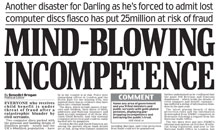
Wonder if this'll shut them up about the 'incompetence' of others? Ya'think?

Count Arthur Strong


Back for a new series on Radio Four. Absolutely hysterical.


Health sites and memories


A friend pinged with with info about a patient community website he'd just found; Patients Like Me.

He'd found it very useful to exchange experiences and information with those with his condition. I had a look around the site and found thriving communities, including one for HIV/AIDS.

This took me right back to two decades ago (gulp) when the first internet responses to AIDS appeared. In the early 90s I edited a magazine which needed the latest research information. This, literally, came off the boat, so was several months old. So when I encountered the net it was with astonishment that all this info was there and brand new!

The info was pure text and basically a fairly unusable, certainly unsearchable, database interface. But it was astonishing.

What I was looking at was the AIDS Education Global Information System (AEGiS), which is now the world's largest Database of AIDS information. (The only resource larger is the U.S. National Library of Medicine, but it only offers some of its information on a website).

Since 1992, AEGiS has sought out scientific abstracts from local, regional and international AIDS conferences, related news, reports, and journal articles and compiled them a fully-indexed, cross-referenced and keywords searchable database.

The site is deliberately light on visuals that would make it difficult to access for those with slower computers.

It was originally started as a small electronic bulletin board system (BBS) by Jamie Jemison in 1986. Sister Mary Elizabeth Clark, a transsexual pioneer, and US Navy/US Army veteran took it over in 1990, inspired by meeting an isolated young man with AIDS in rural Missouri. Under her direction and tireless effort, the database grew and grew.

She worked 18-hour days from the living room of the mobile home she shared with her aging parents. It sits just across San Juan Creek near LA from the new 1,700-square-foot office, which Clark's 93-year-old father, Ed, happened upon and recommended for AEGiS just months before he died. They moved into that office only a few years ago.

AEGiS is nowadays funded by the US National Library of Medicine, Elton John AIDS Foundation, Boehringer Ingelheim, Bristol-Myers Squibb, John M Lloyd Foundation, Roche / Trimeris, and the Bridgestone/Firestone Trust.

Sister Clark is one of my heroes, a real web pioneer and a true inspiration.

She's received many awards including the 'Award of Courage' from the American Foundation for AIDS Research, and the Human Rights Award from the International Assn. of Physicians in AIDS Care. AEGiS was nominated for U.N. honors in 1999, 2001 and 2003.

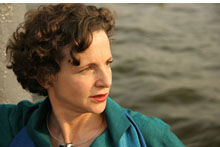
Another hero and inspiration is epidemiologist Elizabeth Pisani.

HIV/AIDS work is very political, including in affected communities, and that slants priorities and funding.

A good example would be the lack of promotion for many years of a 'negative' status for gay men - it was seen as somehow undermining HIV+ gay men. I suffered a lot of grief for that view when I worked in the area.

Pisani talks a lot of sense on these sorts of topics:
The problem, Pisani says, is that 80% of the Pepfar (Bush's AIDS initiative) budget goes on treatment. "Pepfar says great, we've got 1.8 million people in treatment. And next year it will be another 1.8 million! That will mean 3.6 million people. It's exponential - and that's the biggest question mark over the entire approach to Africa. The more treatment you have, the more infection you get."

ARVs [antiretroviral drugs] reduce people's viral load, she agrees, making them less likely to infect someone else - as long as they don't miss a single dose. "But it also keeps them alive longer, and healthy enough to want to have sex. You only have to look at the experience of the UK or US gay communities where we've had more or less universal access to ARVs for at least eight or nine years, and the number of new infections are rising. More people are living longer with HIV, and there is what we call behavioural disinhibition: 'Fuck the condoms, I don't need them any more, because if he's positive he'll be on drugs, so he probably won't infect me. And if I do get infected, it would be annoying, but not the end of the world.'

"But having Aids is not a picnic. Yes, it's great that all this stuff on treatment is happening. But it becomes all the more urgent to have effective prevention. And that's not happening."

"Is not a picnic" is putting it mildly, you can expect to live around 25 years on ARVs. It makes me despair that so many young gay men are condemning themselves to shorter lives without a single clue that this is what they're doing by ignoring the condoms. Plus the government is cutting back on preventions spend.

Pisani did a few interviews in the UK last month for her brilliant book The Wisdom of Whores: Bureaucrats, Brothels, and the Business of AIDS.

On News24's HardTalk, professional dick Stephen Sackur spent a lot of time quizzing her about 'mafia connections'.

By contrast Andrew Marr, was more interested and asked great questions.

Her blog is also called The Wisdom of Whores.