From: "Paul Canning"
To: "EFA stop censorship list"
Date: Thu, 13 May 1999 18:50:48 +1000
Subject: [STOP] The net closes
n.b. this article will be published in City Hub (May 25) in an edited form.
The net closes Paul Canning Harradine is a joke; Colston is a big joke. And the fate of the net access we've grown used to rests in their hands. At the time of writing it is unclear whether the government will get its Internet Censorship legislation through before it loses its balance of power in the Senate at the end of June, though it looks likely. We face a net censorship regime more restrictive than Malaysia's or Singapore's. One that has been shown by everyone from the CSIRO to IBM to be unworkable, that will systematically promote discrimination, that will badly compromise small Internet Service Providers, place content creators outside the law and is wide open to mischief makers. Just one element, the requirement that access to material rated 'R' using the film and video classifications use adult verification (AVS), not only highlights the act's absurdities but will make a lot of valuable Australian content harder to find. AVS presents an enormous barrier to Internet users leading to huge drop offs in site visits. Search engines will not index websites using AVS and there are big privacy concerns. The R standard is "material considered likely to be harmful to those under 18 years and/or possibly offensive to some sections of the adult community." Some (non-porn) websites are already considering moving overseas because of this. One Nation's news site has already gone. The government says that using offline film ratings is appropriate because convergence with other mediums will make the Internet more like TV -as Jon Casimir put it in the Herald, "I reckon TV is more likely to start looking like the Net than the other way around". But the real reason they were deliberately picked was to force more restrictive censorship. The Committee allowed less than seven days for comment on the actual bill, which was worse than outlined in the initial proposals. There is no doubt that this has happened at the speed it is happening because of Harradine, but the bill fits with Alston's moral vision. The Herald's Alan Ramsey described Alston as a "hard man of cabinet" and we've seen that throughout the net censorship debate, with a barrage of outrageous statements against the bill's opponents alongside technobabble about how 'easy' it is to censor the net. It's worked. The media has seen the bill as simply about blocking porn to the kiddies - and who in their right mind opposes that? The 'it won't work' angle, pushed by the Industry, backfired as Alston appealed to general non-net community disquiet about 'nasties' and castigated industry whining over the costs. Civil liberties and privacy have disappeared as issues. The Select Committee's report doesn't even bother to mention them. What has been achieved is a hardening of Labor and Democrat opposition to typical and world wide, knee-jerk proposals like this bill. Both now support regulation of filter products, which the gay and lesbian community pushed for. Internet service providers (ISPs) are going to put user's net access through filters on proxy servers to comply with the demand that overseas 'offensive' material be blocked. Unregulated filters are one of the greatest long-term threats to online liberty. Relatively new technology, filters are notorious for their 'collateral damage', often perceived as a mere by product. Hilarities like the blocking of 'button' because of that word's first four letters operate alongside systematically blocking of particular topics. Impacts like 'over broad blocking', where entire servers like free space providers Tripod or GeoCities which house many small Australian community groups are blocked, isn't seen for what it really is; bulldozing a library with a couple of dirty books on its shelves. Mainly they're American products and carry American values but if you use the new Australian 'family friendly' search engine iSEEK, based on American technology, certain search terms will be blocked - like 'queer', 'heroin', 'bisexual, 'sex education'. When I tried it a search on 'paedophilia' iSEEK threw up a link to a pro-paedophilia site. Within twenty-four hours of my circulation of this information the blocked search terms had mysteriously changed and 'paedophilia' was blocked. Before it had blocked 'suicide' and 'rape'. The producers of iSEEK, Brisbane Company Infopro, say in their PR that the technology under iSEEK "does not restrict access to any worthwhile sites". Filters disproportionately effect some groups - like lesbians and gays, and also feminists and drug educators - but they also diminish the net's educational value to all. St Vincents Hospital Melbourne's filter won't allow access to an HIV information site. Having looked at the site I still cannot work out what element (image or text) triggered the blocking. Without any sort of regulation filters will entrench discrimination. When governments are pushing kids onto the net and hence kids are using it as a primary information source it's either irresponsibility or deliberate tactics that they will find it hard to access info like sex and drug education. This is already happening in the NSW eduction system, which uses an American filter called SmartFilter. Numerous teenagers as well as adults in TAFE colleges have reported blocked access. SmartFilter has been found to block the U.S. Constitution, the Declaration of Independence, anti-drug information, the Koran and the Bible. Locally, the Star Observer found SmartFilter blocking Parents and Friends of Lesbians and Gays (PFLAG) and HIV/AIDS fundraising organisation the Bobby Goldsmith Foundation (BGF). Craig Smith, Executive Director of the Getting Real Association, producer of websites for teenagers about health and welfare issues, says that he builds the limitations imposed by filtering and monitoring into his site design. Students trying to access a NSW Health Department supported website 'Make A Noise' often complain about blocks on pages at the site, predominantly those about sexual health. "The main 'filtering' topics seem to be sex, gambling, criminal skills, hate speech and drugs. Which makes things a little hard when you are talking about sexuality, and quite often violence and drug and alcohol issues," he says. When youth advisory boards put together the 'Getting Real' site (aimed at gay teens): "there was a huge focus on ensuring that the site did not contain some overtly sexual or queer name or design because of the chance that school or library tracking/filtering would identify the kind of sites they had been accessing." Fear of the monitoring they perform is one of the main ways filters do stop access. They record where people have been and this stops people accessing things that someone thinks they shouldn't. This doesn't mean just porn sites. This means a fourteen-year-old girl stopped from accessing sexual assault information on the net because the parent assaulting her will find out. Monitoring is a big selling point with filters. The free 'The Internet Filter' (TIF), sold by One Catholic Super-site (Australia), is being promoted thus: "It can be used in effect to spy on employees and gather information on people's choices." Alston has talked up a new Australian filter, Internet Sheriff, produced by Queensland company Clareview (they get a big run in the Committee Report). Yet this supposedly 'bleeding edge' software has already been shown to 'accidentally ' block the National Party's and school websites amongst others. Filters cannot block all porn or other 'nasties' from kids because they cannot review all the estimated 36 million websites worldwide, and 'keyword' based blocking doesn't always work. You wouldn't know this from reading the marketing blurb and they won't tell you what's on the banned lists (it's a 'trade secret '). Less than 24 hours after the Colorado school massacre CYBERsitter was touting "an informational Web site for parents concerned with what their teens are accessing on the Internet." CYBERsitter, a favourite of the American religious right, even scans your hard drive while it's being set up and if you've visited certain anti-censorship websites it won't install. No controls on such products exist, although use of the Fair Trading and Anti-Discrimination laws is being explored. It's effectively the privatisation of censorship through the decision making of ISPs and filters that is happening. The government's doubletalk on 'education' campaigns about filters is shown for the farce it is by a look at the Australian Broadcasting Authority (ABA) 'family ' page. It literally advertises filters and doesn't detail the cons. Most parents and educators would be unaware of the real impact which filters are having on kids information access, and I doubt that they would count such blocked access as an acceptable 'trade-off' against concerns that minors may view 'objectionable' content online. What the law will do The whole thing is based on complaints and will be run by the ABA and the Office of Film & Literature Classification (OFLC). Neither of which could give me a straight answer as to how it'll work in practise. If the ABA labels your content R you have to put on an AVS within 24 hours or the ISP gets fined $27k a day. If it's RC or X they have a day to take it down or be fined. ISPs are supposed to take "reasonable steps" when the ABA wants overseas RC or X content blocked. This means filtered access. If you want to get a rating for the OFLC be prepared to pay on a 'cost recovery' basis. Content providers can't complain because ISPs will be legally indemnified. ISPs cannot give children access without parental consent. Mail in "stored form" in not excluded but no one knows quite what this means. It could mean that anyone with a email account could be ordered to 'take down' files on their hard drive because it could be mailed to someone. Mailing list archives and bulletin boards will be effected. How to take action Join Electronic Frontiers Australia's protest march, Saturday May 28, 1pm, then to the OFLC and ABA offices. Sites to visit: Electronic Frontiers Australia for action details http://www.efa.org.au/
Peacefire (dissecting filters) http://www.peacefire.org/
Senate Committee report http://www.saia.asn.au/
ICON's story http://www.smh.com.au/icon/990508/cover.html
Broadcasting Services Amendment (Online Services) Bill (zipped Word file)
http://www.aph.gov.au/senate/committee/legislation/doc/online99-doc.zip
Copyright: Paul Canning, 1999. Permission granted for reproduction for activist purposes only. All other reproduction requests to author at canning@rainbow.net.au | 

 It was originally started as a small electronic bulletin board system (BBS) by Jamie Jemison in 1986. Sister Mary Elizabeth Clark, a transsexual pioneer, and US Navy/US Army veteran took it over in 1990, inspired by meeting an isolated young man with AIDS in rural Missouri. Under her direction and tireless effort, the database grew and grew.
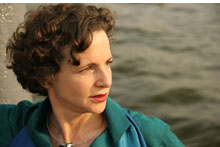 Another hero and inspiration is epidemiologist Elizabeth Pisani.

 ACON
ACON


 Peacefire